What is the Best Coating for an Industrial Water Tank? Epoxy vs. Polyurea

Mar 4, 2025 | Educational

We spoke with Matt Elden, Business Development Director, to explore key factors when selecting epoxy or polyurea for coating an industrial water tank. With nearly 25 years in the coatings industry, Elden began his career formulating coatings right out of college after earning his chemistry degree. After eight years in formulation, he transitioned to coating sales in 2008. By 2016, he advanced further up the supply chain, selling raw materials to paint manufacturers, along with other industries. In 2024, he brought his expertise to Advanced Rehabilitation Technology (ART) and OBIC.

Understanding Industrial Water Tank Corrosion

Industrial water tanks are vital for ensuring safe drinking water, but they are constantly exposed to moisture and temperature fluctuations that lead to corrosion. Corrosion weakens the tank structure, increases maintenance costs, and risks water contamination. To prevent or solve these issues, selecting the right coating is crucial. According to multiple sources, corrosion costs approximately $450B annually in the U.S. alone.

“The first step is assessing the project – are you working with a new tank or an existing structure?” Elden says. “With a new tank, its internal condition is more predictable, but an older tank requires a thorough evaluation. You also need to consider the expected lifespan you want from your investment. Another often understates, yet equally important consideration is the surface preparation of the structure. The key to the coating working as it should is making sure the substrate is prepared appropriately.”
epoxy vs polyurea

Epoxy Advantages and Limitations

Both epoxy and polyurea are two component coating systems, so which one is better? That answer has a lot to do with the expected environmental fluctuations (like temperature and humidity) during the tank’s expected service life, as well as at the time of application. Epoxy coatings create a hard, protective layer that resists chemical exposure and corrosion. Epoxy coatings, when totally cured, create a very rigid coating with excellent crosslink density. This is great when you know the structure won’t move. Additionally, epoxies are sometimes ‘specified’ at thinner film builds. With everything else equal, a higher film build (often dubbed DFT, or dry film thickness) will give better corrosion resistance.

Advantages of Epoxy:

  • Strong Adhesion – Bonds well to properly prepared surfaces, providing effective protection
  • Chemical Resistance – Withstands exposure to many water treatment chemicals
  • Proven Track Record – Decades of use in water tank applications

Limitations of Epoxy:

  • Long Curing Time – Epoxies can take days to fully cure, delaying return to service
  • Rigid Composition – Prone to cracking, chipping, and wear when subjected to movement or temperature changes. Freeze/thaw cycles can be especially detrimental.
  • Environmental Susceptibility – Epoxy can be more susceptible to wear in very acidic or low pH environments, as well as continuous exposure to grit and sand.

Polyurea Advantages and Limitations

Polyurea coatings have gained popularity due to their flexibility, rapid curing time, and enhanced resistance to environmental factors. Unlike epoxy, polyurea remains elastic (due to its different chemical makeup), making it ideal for tanks exposed to structural movement or extreme weather conditions. “In our experience, tanks are living, breathing structures that are expected to last a very long time,” Elden states. “We believe that lining these tanks with a more flexible coating option can be extremely beneficial to keeping long term maintenance costs to a minimum.”

Advantages of Polyurea:

  • Fast Curing Time – Dries in about 30 seconds, allowing tanks to return to service quickly
  • Superior Flexibility – Withstands structural shifts and avoids microchipping
  • High Chemical Resistance – Protects against water treatment chemicals and contaminants

Limitations of Polyurea:

  • Specialized Application – Requires trained professionals for proper application
  • Higher Initial Cost – Could be more expensive upfront but can lead to long-term savings due to less maintenance

“Industrial water tanks must be taken out of service during rehabilitation, temporarily cutting off water access for those who rely on them,” Elden says. “This makes a quick return to service an important factor in the coating selection process.”
Why Choose Polyurea Over Epoxy for Industrial Water Tanks?

For applications where the substrate is prone to movement or flexing, epoxy may not be the best choice. This is where polyurea becomes the preferred solution. “In the manhole repair space, we’ve seen thousands of cases where epoxy coatings failed due to freeze/thaw cycles and environmental stress,” he states. “Because manholes are underground, they experience extreme conditions that can cause epoxy to crack and deteriorate. Municipalities often reach out after just a year or two, reporting epoxy failures and requesting polyurea as a more durable solution. While epoxy coatings may hold up if they survive the initial freeze/thaw cycle, polyurea offers a proven, long-term performance advantage.”

Polyurea may be the best choice if return to service is a primary concern. Elden states that municipalities prioritize getting potable water tanks back into service as quickly as possible, as downtime creates major challenges for plant superintendents and maintenance operators. This is where polyurea provides a significant advantage. While epoxy coatings may take one to two days to fully cure, polyurea cures in just 30 seconds – dramatically reducing downtime and ensuring a faster return to service. This rapid cure time makes polyurea a game-changer for that.

Research is Key

“If I was a plant superintendent making this decision, I’d consult multiple contractors and coating manufacturers to explore all available options,” Elden recommends. “Rehabbing a potable water tank is a significant investment – one of the largest you’ll make outside of building new. Taking the time to research all your options ensures confidence in the chosen solution. Many companies and contractors are more than willing to provide guidance and educate you on the best approach for your specific tank configuration. When you’re pricing out your project, you also want to compare apples to apples on a dry film basis, because at the end of the day, the dry film that protects the substrate is what you’re paying for.”
The OBIC Advantage

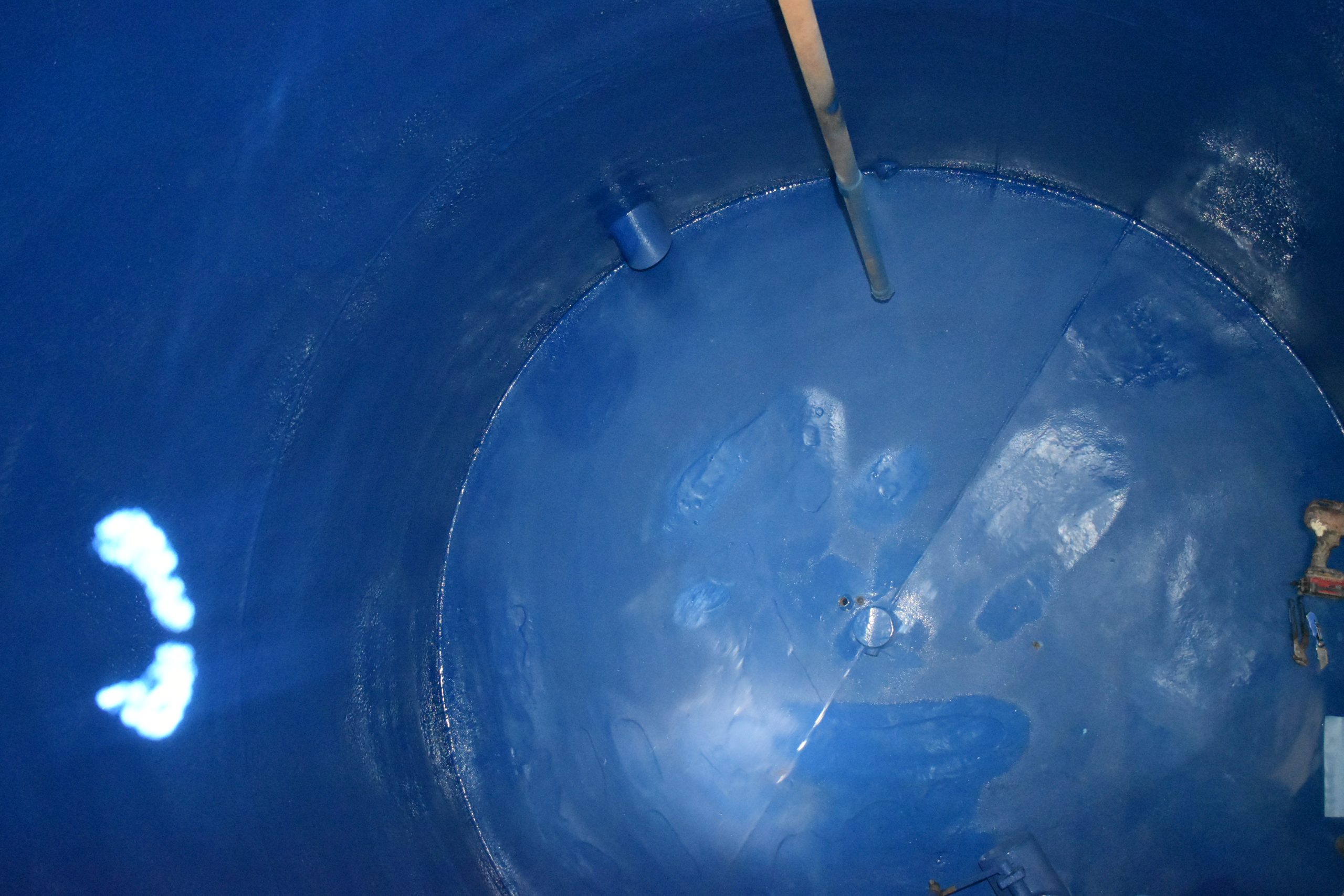
OBIC’s 1100 aromatic polyurea coating is typically used for potable water containment, water treatment, industrial facilities, food processing plants, and bottling/canning plants. It will not be susceptible to cracking or microcracking and it can bridge any cracks that might you might have in the substrate. Plus, it provides quick return to service and has superior elongation and flexibility. Investing in the right coating today can extend the life of your water tank and reduce future maintenance costs, making polyurea the smart choice for long-term protection.

If you’d like to learn more about the OBIC Armor system, discuss your next project, or schedule a demo, please Contact Us or give us a call at 866-636-4854 and our team will be happy to help you!
Chief Financial Officer

KRISTI KIMPEL

With more than 16 years of experience in the trenchless technology industry, Kristi has been with OBIC since the company’s conception. In that time, Kristi has worn many hats while managing the front office: accounting, safety, marketing, event planning, insurance, and shipping and receiving, just to name a few.

Prior to joining the OBIC team, Kristi worked for a transportation broker as an onsite representative for the customers while also serving as an internal transportation specialist. She stays involved in the local manufacturing industry by maintaining active membership in the Black Swamp Safety Council. In addition, she participates in leadership positions for Williams County, learning how the community works and using it as an avenue to be more involved.

In her free time, Kristi stays busy with her two kids who are involved in a variety of extracurricular clubs and sports. She also serves as a school board member and as an archery coach where she is committed to teaching archery basics as well as important life skills. She is passionate about growing and leading women in discipleship programs and wants to positively influence others around her.


Physical Properties:

  • Z

    Tensile Strength: 3351 psi

  • Z

    Elongation: 395%

  • Z

    Hardness: 48D

  • Z

    Tear Resistance: 417 pli

  • Z

    SWAT ASTM G210: Pass

CEO/Chief Visionary Officer

DUSTIN SCHLACHTER

Dustin Schlachter is dedicated to providing water and wastewater system repair and maintenance solutions that are both affordable and long-lasting. With a visionary mindset, he is responsible for setting the strategic course for OBIC and ensuring high growth initiatives and strong partnerships as he leads the company toward the future.

Dustin’s entrepreneurial aspiration has held him captive to the trenchless technology field since 1999 when he and his father founded S&S Directional Boring. No stranger to change management, he has successfully led multiple companies as they embraced new infrastructure rehabilitation technologies. In 2007, Dustin founded Advanced Rehabilitation Technology where he continued to grow and expand his work to include infrastructure rehabilitation through lining and coating system applications. This expansion allowed him to strengthen the executive and visionary skills he would need one day to lead a global company.

Dustin continues to expand upon and share his knowledge of the industry by serving as a member and past president of the Great Lakes Trenchless Association. He is also an active member of the National Association of Sewer Service Companies and the Water Environment Federation.

A devoted husband and father of three, Dustin finds enjoyment and relaxation in outdoor activities like landscaping and gardening. Dustin is dedicated to learning and growing in faith, and his life goal is to help others grow as well.​


Marketing Manager

Lee Drugan

Lee Drugan is a seasoned Marketing Manager with over 12 years of experience, specializing in bridging the gap between complex industries and their audiences. Lee’s core passion lies in helping companies and individuals understand their ‘Why’ – which is usually a great connection between customer and the company they choose to work with.

Lee’s approach to marketing is defined by adaptability, integrity, and confidence. Understanding that change is constant and trust is essential, Lee develops marketing strategies that genuinely connect with audiences. With a Degree in Management/Marketing from Ashland University, he has expertise in adaptive strategies, digital marketing, and video/content creation, allowing him to create engaging and educational content that leaves a lasting impact.

In current roles, particularly as Marketing Manager for OBIC, Lee is responsible for all facets of marketing and advertising. Lee thrives on the challenge of highlighting the critical role of infrastructure maintenance. His marketing philosophy highlights the power of engaging and educational content, with a strong focus on brand perception and lasting results.

Outside of work, Lee finds joy in traveling with his family and creating opportunities for his kids to excel in what they love.


Member & Business Development

TROY REED

Troy is responsible for member and business development at OBIC and brings over 35 years of experience in water and wastewater infrastructure construction to the position. From fieldwork to project management, Troy’s industry experience includes a proven track record of expertly communicating a client’s objectives to the crews who are performing the work on-site. No stranger to coordinating high-priority projects, Troy ensures client satisfaction while successfully managing multiple crews of up to 130 employees who are working simultaneously on water and wastewater infrastructure projects on both residential and commercial sites.

Troy’s favorite pastimes include boating, fishing and camping, but his true passion is spending time with his three grandchildren. Although his work schedule keeps him busy, Troy and his wife enjoying finding time to rehabilitate houses.


Director of Corporate Training

TREY RUSSELL HESSELSCHWARDT

Before holding the Director of Corporate Training role for OBIC, Trey held various positions including Crew Leader, Project Manager, and Safety Manager at Advanced Rehabilitation Technology (ART), an OBIC certified installer.

As OBIC’s Director of Corporate Training, Trey leads the development and delivery of training programs that ensure applicators are well-versed in OBIC products, equipment, and best practices. He provides hands-on instruction in product use and maintenance, while also contributing to ongoing research and development efforts. His technical knowledge and field experience makes him a trusted resource for both internal teams and external partners, guiding customers in selecting and applying the right solutions for their needs.

Trey holds an Associate Degree in Project Management Technology and maintains several professional certifications, including BCSP Certified Health and Safety Technician, OSHA 40-Hour Certification, and Confined Space Certification. He currently serves as Treasurer for the Polyurea Development Association (PDA), where he supports the advancement of industry standards and practices.

Prior to joining ART, Trey served honorably in the U.S. Army as a Combat Medic for seven years, a background that reflects his strong sense of discipline, leadership, and service.

Outside of work, Trey enjoys spending time outdoors camping, hiking, and hunting with his wife Jamie and their two sons, Jones and Charlie. He’s also an avid sports fan and a proud supporter of the University of Michigan.


Director of Technology

BOB KLOPFENSTEIN

Bob Klopfenstein has been with OBIC since July of 2018. With over 35 years in the chemical and sewer lining coating, Bob has experience working with clients in every industry that OBIC serves. Over the past 15 years, his focus has been on offering repair and maintenance solutions for the water and wastewater structure rehabilitation industry.

Bob holds a bachelor’s degree from Bradley University and stays current on industry challenges and trends by participating in professional organizations that include the Water Environment Federation, National Association of Sewer Service Companies and North American Society for Trenchless Technology.

In his free time, Bob enjoys golfing, gardening and wine collecting.


Vice President of Business Development

MIKE HOFFMASTER

Mike Hoffmaster has over 38 years of experience working in the construction industry, with the last 14 spent in trenchless technology. His experience, which includes working with local construction firms and national manufacturers, makes him uniquely qualified to support and develop OBIC’s network of certified installers and to introduce OBIC products to new markets.

Mike earned his bachelor of science from Shepard University while working full-time in a precast concrete plant. He has helped to open new markets across North America and in Europe. Mike is active with numerous industry organizations, committees and serves on several Board of Directors.

Committed to giving back to his community, Mike has served as the track and field organizer for the Special Olympics for over 32 years and has volunteered with local high school athletics for 37 years. In his free time, Mike enjoys cooking, traveling and photography.