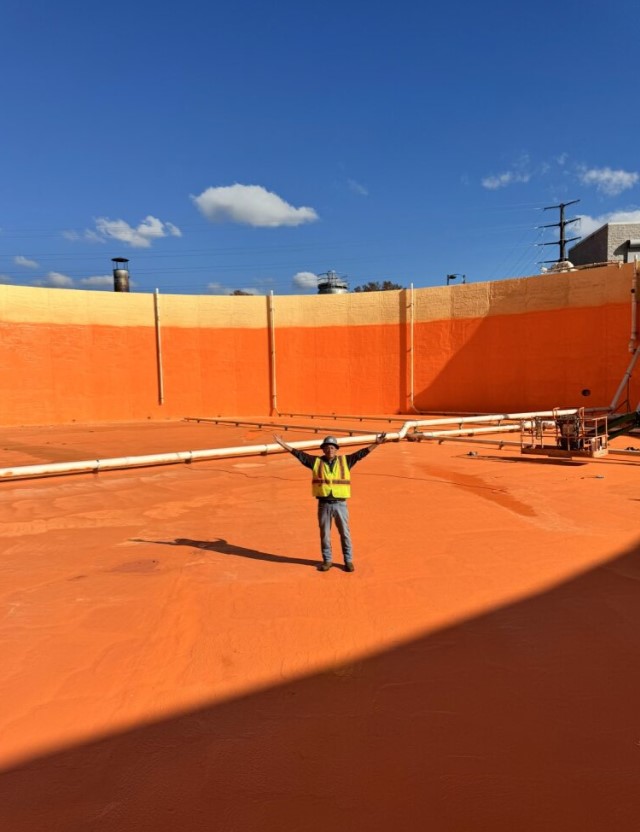
For the Milton Regional Sewer Authority (MRSA), wastewater treatment is more than a utility; it’s an energy generator. Each day, the facility processes roughly 1 million gallons of wastewater from a large food manufacturer. At the heart of that process is a massive 7.5-million-gallon anaerobic reactor tank, which not only treats the high-strength industrial waste but also produces methane gas to generate electricity.
After more than a decade of service, the tank, measuring 34-feet deep and 207-feet in diameter, began showing signs of wear. Concrete deterioration near the top and abrasion along the floor raised serious concerns about long-term performance. To extend the life of this massive tank and protect against future damage, MRSA turned to Advanced Rehabilitation Technology (ART), an OBIC-certified installer, to restore the structure from the inside out.
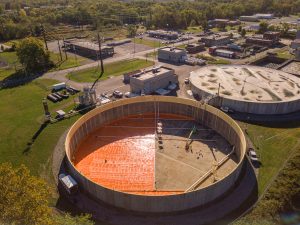
“The tank’s been in service since about 2013,” explains Genie Bausinger, Executive Director of MRSA. “In the early 2020s we noticed deterioration near the top where the gas is stored, and it was a concern due to the corrosive nature of the methane we generate.”
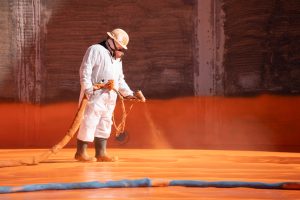
Once the tank was drained, a more complex picture emerged. “It wasn’t just corrosion from the gas,” Bausinger said. “We found abrasion along the floor caused by the wastewater flow itself.” Because the tank receives high-organic waste with little to no oxygen, the environment is rich in hydrogen sulfide (H₂S), a highly corrosive gas notorious for degrading concrete.
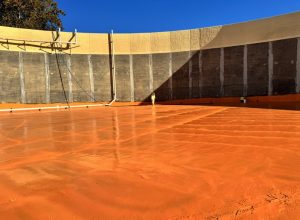
After evaluating multiple repair options over several years, MRSA selected the OBIC Armor Multi-Layer System that consists of OBIC 1306 closed-cell foam sandwiched between two layers of OBIC 1000. “Concrete is a living, breathing entity,” Rusty Hesselschwardt, Business Development Manager at ART explained. “When it freezes and thaws, it moves. Epoxies tend to crack under that movement. OBIC’s polyurea lining, with 400% elongation, moves and breathes with the structure.”
OBIC’s multi-layer system also helped address existing cracks and seams. “We filled voids with foam and built layers of protection that will extend this tank’s life by 50 years or more,” Hesselschwardt added.
The project was not without its challenges, however. “An open-top tank in November gets interesting,” he noted. “We lost a couple days to rain. The rental company backed us up a week when equipment was delayed. But we adapted and kept everyone communicating, and that’s what keeps a job like this on track.”
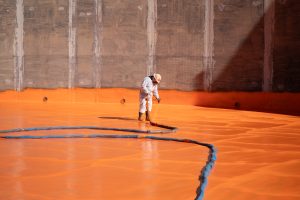
The results impressed MRSA. “They had the entire tank coated in under a month, and communication was excellent throughout,” Bausinger said.
For MRSA, the benefits extend beyond corrosion protection. The renewed reactor ensures consistent wastewater treatment and renewable-energy generation for years to come. “This tank is essential to our operations,” Bausinger noted. “We learned a lot through this project, especially about drainage, and the next one should go even faster.”
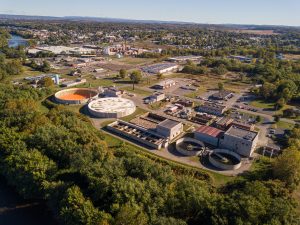
The Milton anaerobic reactor tank rehabilitation demonstrates how OBIC’s lining systems continue to redefine what’s possible in infrastructure restoration. Designed for flexibility, chemical resistance, and longevity, OBIC’s solutions enable facilities like MRSA to repair instead of replace, reducing cost and downtime while extending the life of critical assets.
Contact OBIC or find an OBIC certified installer in your area to discuss how our proven lining systems and leak stop solutions can help protect your infrastructure investment and reduce long-term maintenance costs.